Even though I am past midlife this is something that I wish I knew at 40.
You may know that I’ve been giving Collagen a try for almost two months and can definitely see and feel some differences. I’m currently on the search for a new collagen company so I decided to do some research on collagen and read up on research. I’m 64 years old and active but I was experiencing brittle nails, sagging skin, and joint pain. Here is what I’ve experienced and learned: I apologize in advance for not using the correct words. I try but don’t always get it right. Collagen is the magical ingredient that keeps skin springy, joints cushioned, bones sturdy, and even your gut lining intact. The amount of collagen our body produces starts to dip in our 30s (Why didn’t I know this?) and collagen production declines faster after menopause, so adding additional collagen can help us keep doing the things we love like morning country walks, hanging out with the grandkids, traveling, or tending the veggie patch.
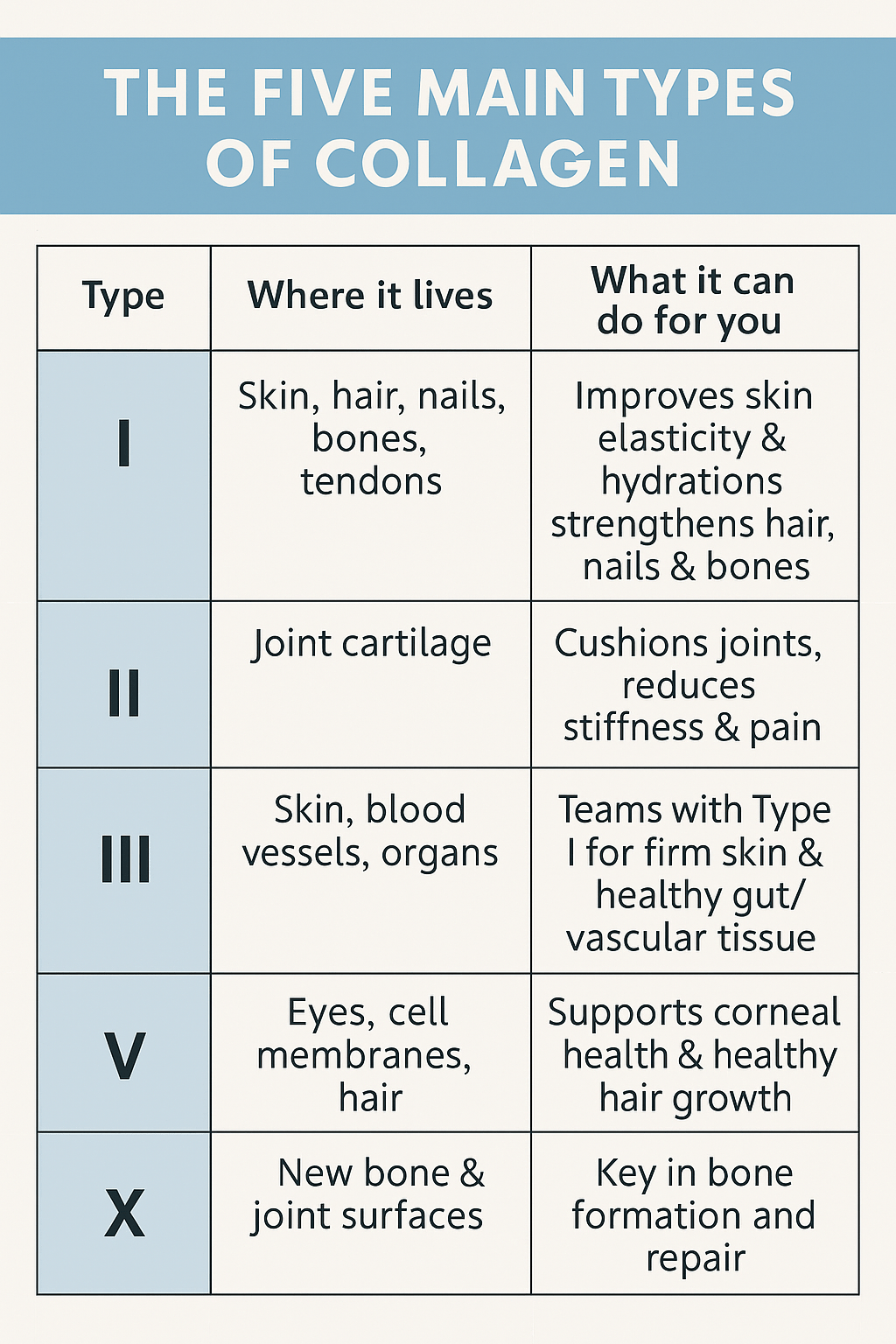
Meet the Five Main Collagen Types
🔹 Type I Collagen
Source: Bovine (cow), marine (fish) Where It’s Found in the Body: Skin, tendons, bones, ligaments Benefits: Improves skin elasticity and hydration Reduces wrinkles and fine lines Supports bone strength and density Strengthens hair and nails Best For: Skin, hair, nails, bones
🔹 Type II Collagen
Source: Chicken sternum cartilage Where It’s Found in the Body: Cartilage Benefits: Supports joint health Reduces joint pain and stiffness Helps with arthritis symptoms Best For: Joints and cartilage
🔹 Type III Collagen
Source: Bovine (cow) Where It’s Found in the Body: Skin, blood vessels, internal organs Benefits: Supports skin firmness Aids in gut health (along with Type I) Promotes organ health and circulation Best For: Skin, gut lining, vascular system
🔹 Type V Collagen
Source: Found in multi-type blends (often bovine or egg membrane) Where It’s Found in the Body: Eyes, placenta, hair Benefits: Supports eye health Important for cell membranes Plays a role in healthy hair growth Best For: Eye tissue, hair, fetal development
🔹 Type X Collagen
Source: Chicken or bovine cartilage Where It’s Found in the Body: Bone and joint cartilage Benefits: Aids in bone formation and repair Supports joint health Best For: Bone and cartilage regeneration
📌 Quick Tip:
Most over-the-counter collagen supplements (especially hydrolyzed collagen peptides) are Type I and III, often combined. If you’re targeting joints, look for supplements with Type II collagen, often labeled as “undenatured collagen type II (UC-II).”
Clinical research backs up the use of oral collagen : a 2025 meta-analysis of 23 randomized trials found oral collagen significantly boosted skin hydration, elasticity and reduced wrinkles in as little as 12 weeks.
According to research for improvements in the joints, taking 40 mg of undenatured Type II collagen daily improved knee range-of-motion and comfort in healthy adults after six months.
Bottom Line
Different types of collagen types each play a role in how you look, or feel. The “best” supplement is the one that matches your goal. If you’re chasing smoother skin and stronger nails, reach for a Type I/III peptide powder. If creaky knees are the issue, type II can help. And if you want to cover all the bases, a multi-type blend is the kitchen-sink option.
Have you tried collagen or are you still on the fence?
I would love to hear your experience in the comments.
Keep moving forward friends,
Karen



 Choosing to Reset
Leave a reply to Patricia Carlyn Cancel reply