With help and advice from successful friends.
My Why
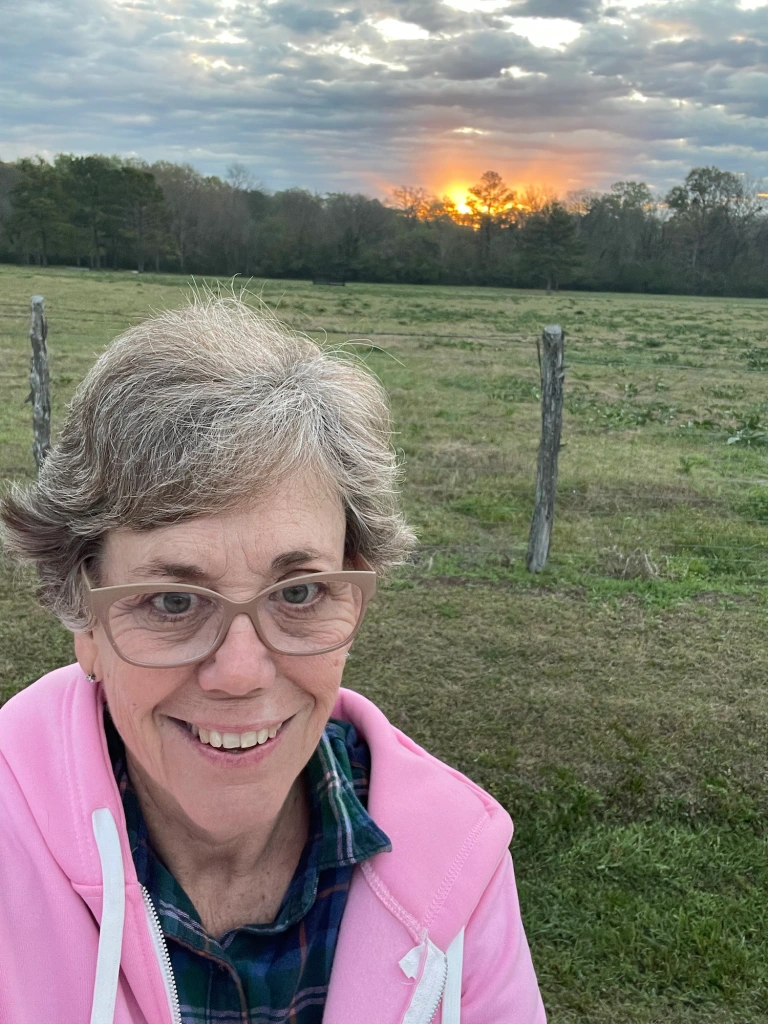
I’m going to start this blog post the same way I start any conversation about my health journey. I am not a dietitian, nutritionist, or health coach. I started this journey as an ordinary 62 year old retired educator, mom, and grandmother. Take what I say with that in mind.
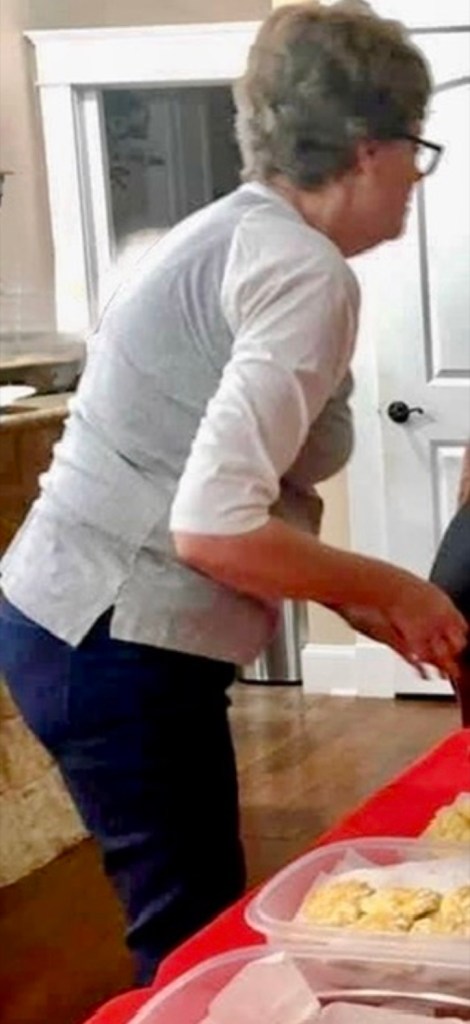
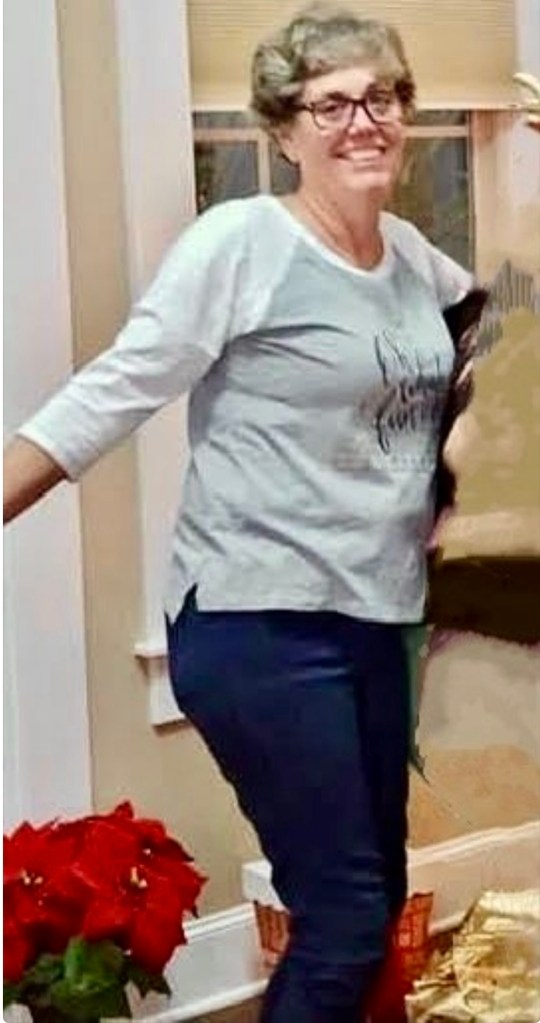
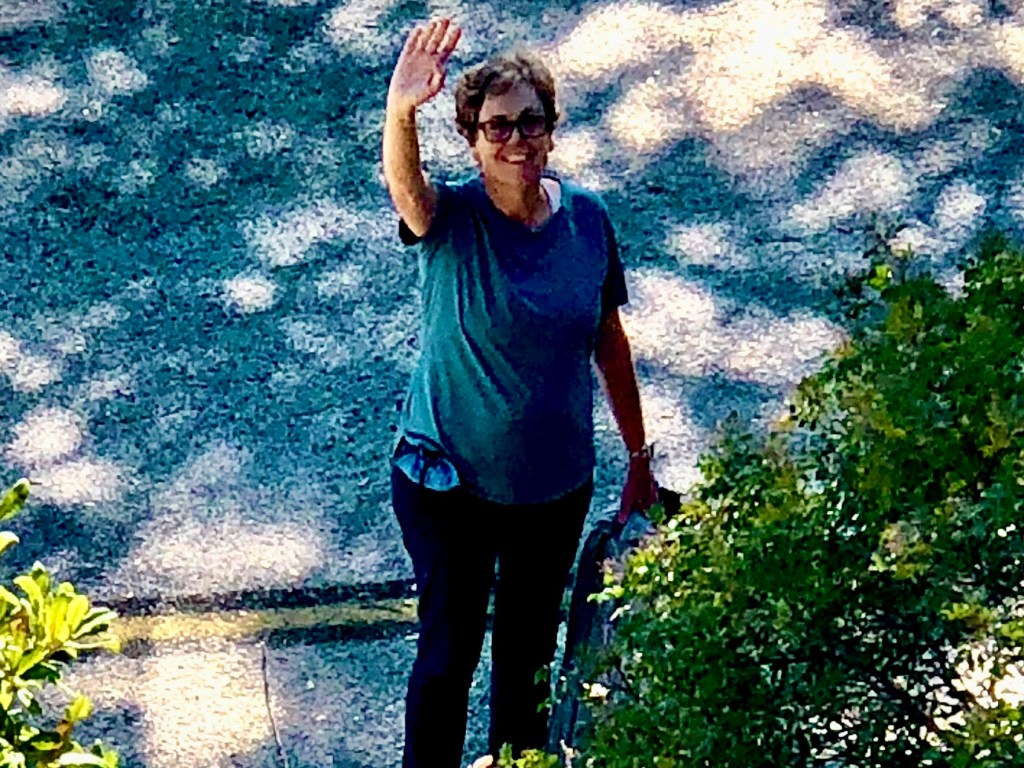
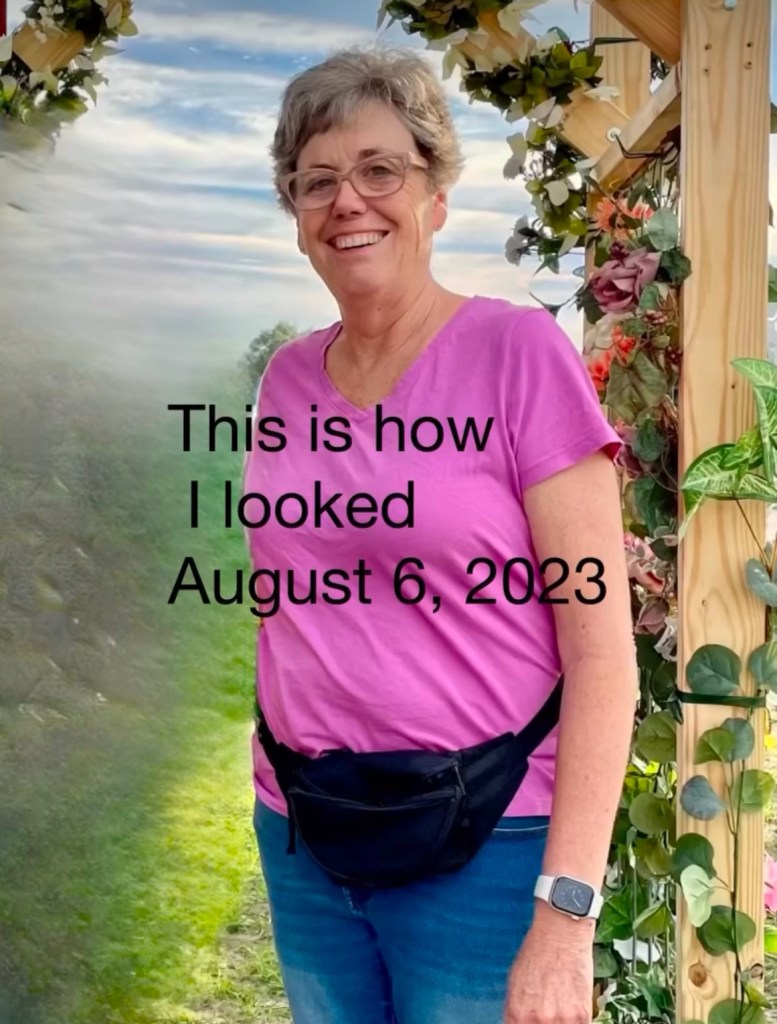
In August of 2023 I saw a photo of myself a decided that enough was enough and knew that if I didn’t make changes I would not be an active participant in my grandchildrens’ lives and that I was increasing the chances that I would end up in a care facility instead of leading a healthy active old age.
That meant I needed strong muscles, strong bones, good balance and a nutritious diet along with being less sedentary.
It was important for me to have a clear understanding of what I was trying to achieve. I knew that whatever I did I wanted it to be sustainable, not a crash diet or get thin quick plan. I’ve done that enough times to know it doesn’t work long term for me.
There isn’t a right or wrong answer for your why.
* Wanting to feel better in your body
* Desiring energy to play with children/grandchildren/pets
* Managing weight or health conditions
* Regaining confidence or independence
- Increased strength to enjoy traveling
📌 Research insight:
Many women over 50 experience a turning point due to menopause, aging parents, or health scares. According to the National Institute on Aging, staying active helps manage chronic disease, maintain independence, and boost mental health.
1. Step One: Just Start Moving
What I did:
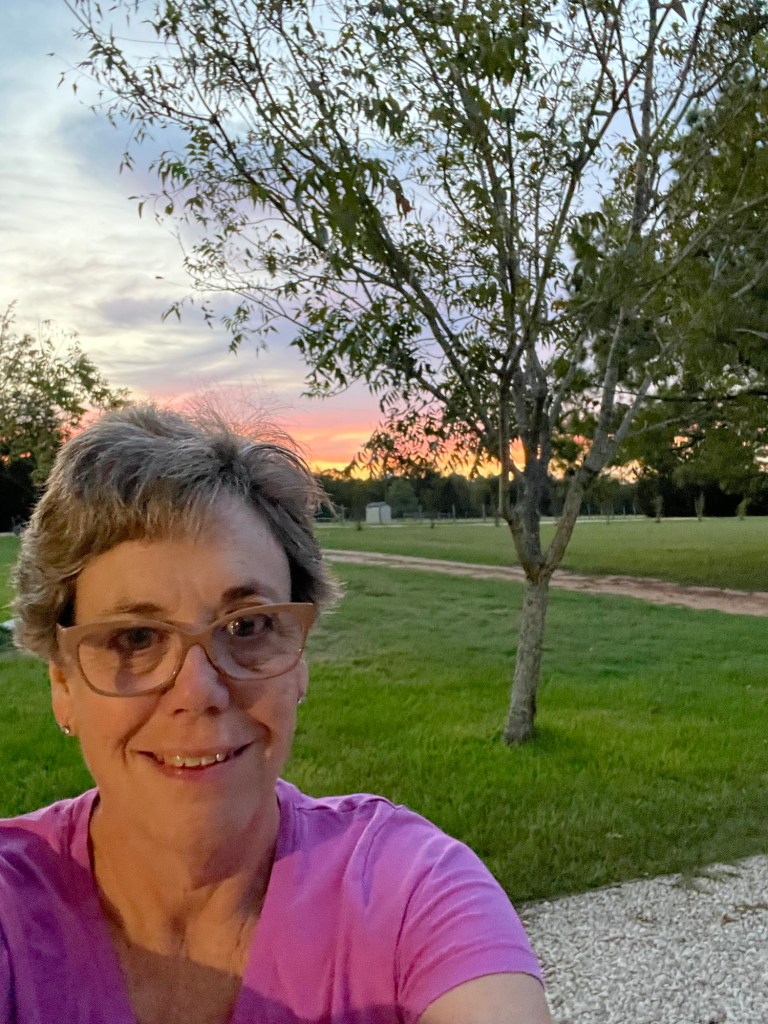
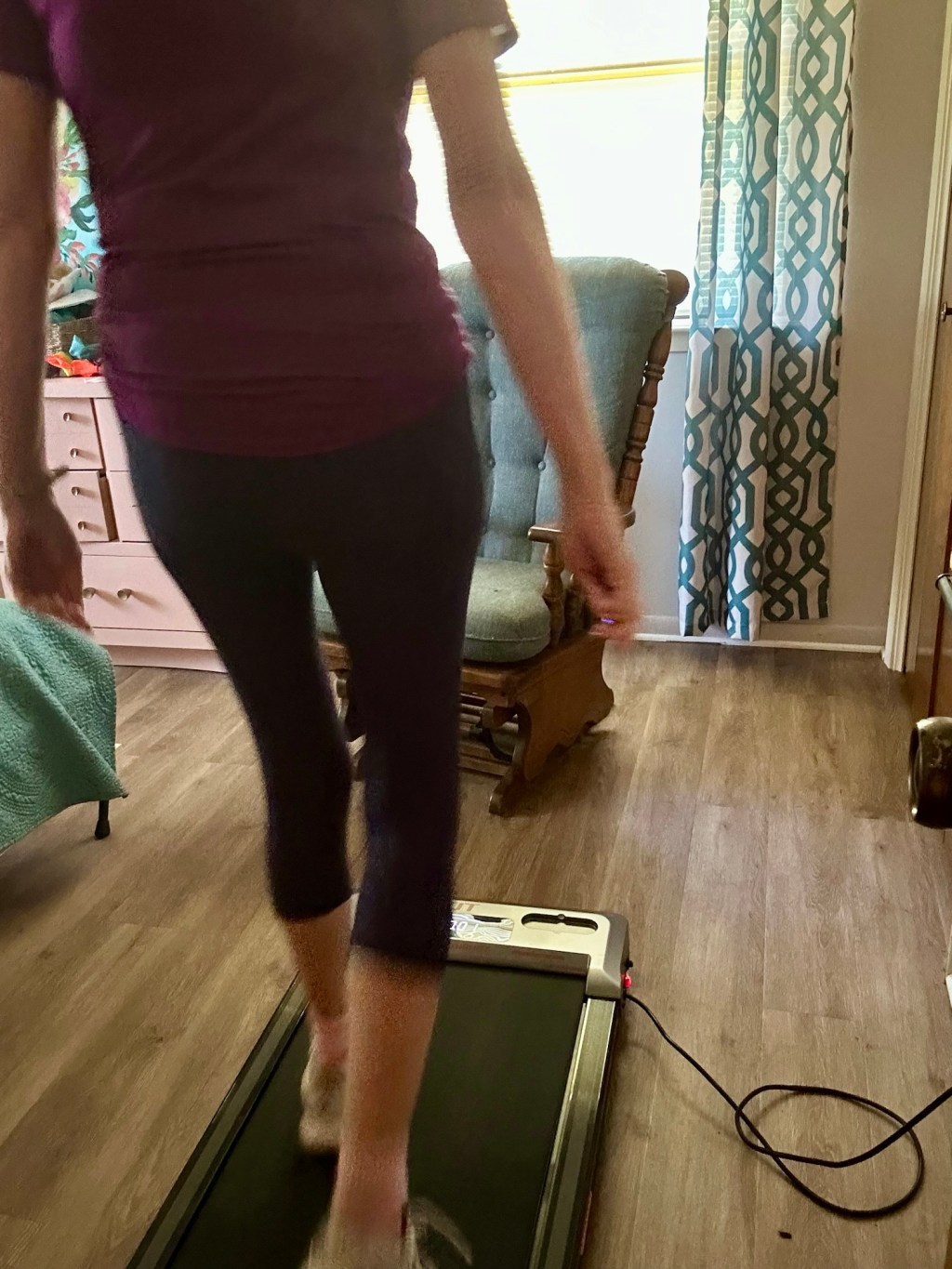
I committed to walking every day. At first it was just a slow 15 minutes around my property. I didn’t worry about pace or distance, I focused on time and consistency.
What you can do:
Walk 5–10 minutes after meals Stretch during TV commercials Use a pedometer or phone app for motivation.
📌 Research insight:
Walking improves cardiovascular health, reduces mortality, and improves mood. A 2019 study in JAMA Internal Medicine found that even low-intensity walking reduces risk of death in older adults (Lee et al., 2019).
2. Step Two: Build a Habit Loop
What I did:
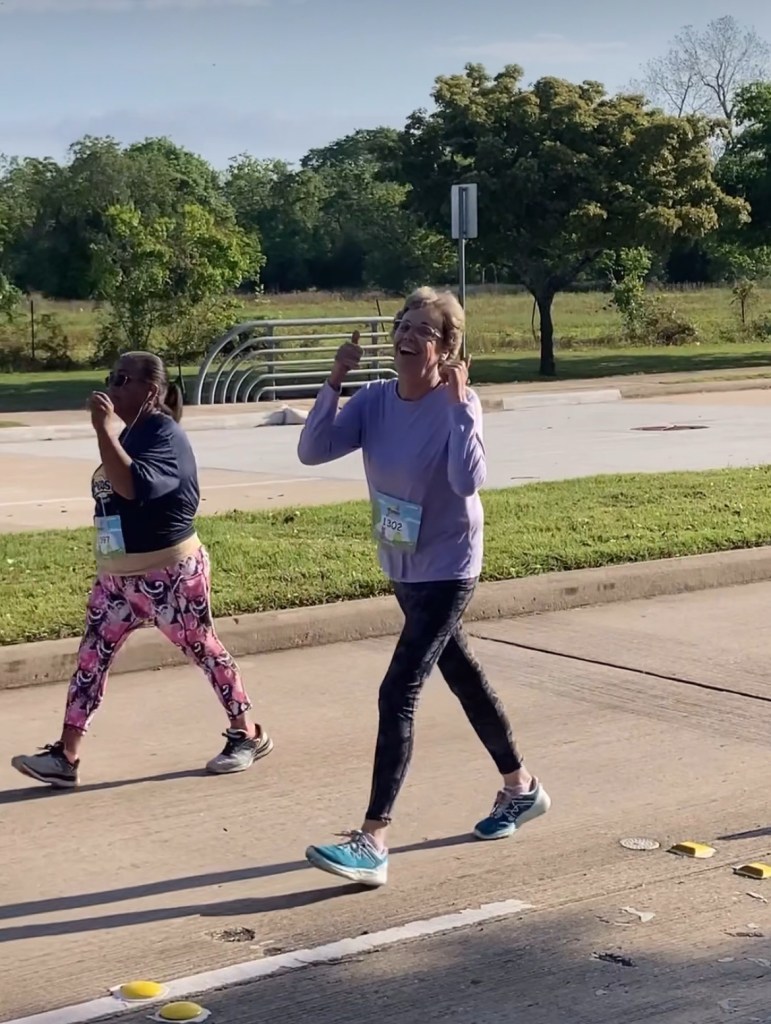
I tied my walking to something I enjoyed—listening to audiobooks or watching the sunrise. I didn’t skip unless I was ill. I walked when it was hot, cold, wet, or dry.
What you can do:
Habit stacking: Find an exercise that you like such as walking, biking, running, or even rowing ( the list is endless) then stack it with something else you have wanted to do but haven’t made time for. One of our friends shared that they are listening to The Bible chapter by chapter while walking. Others are listening to books, podcasts, or music.
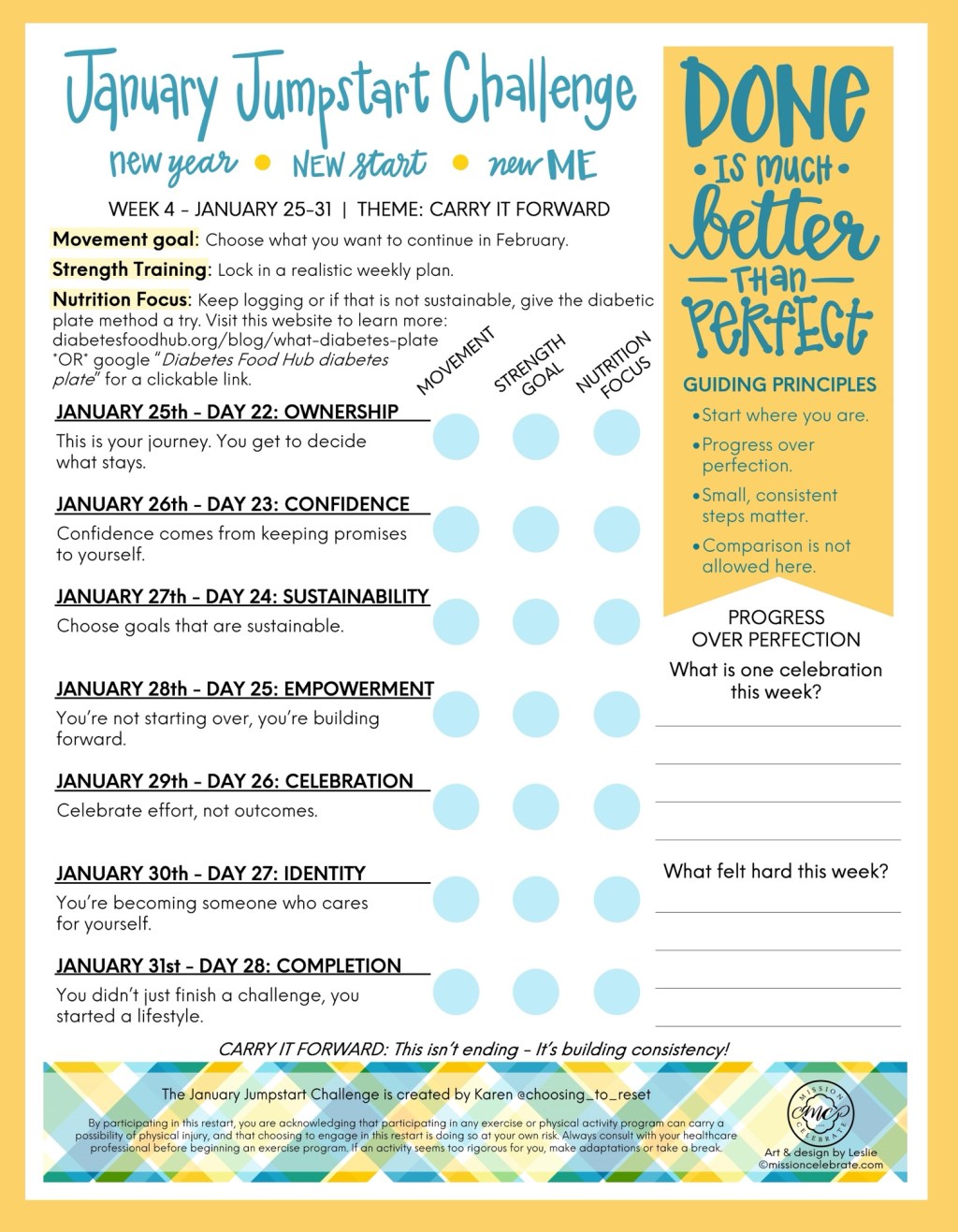
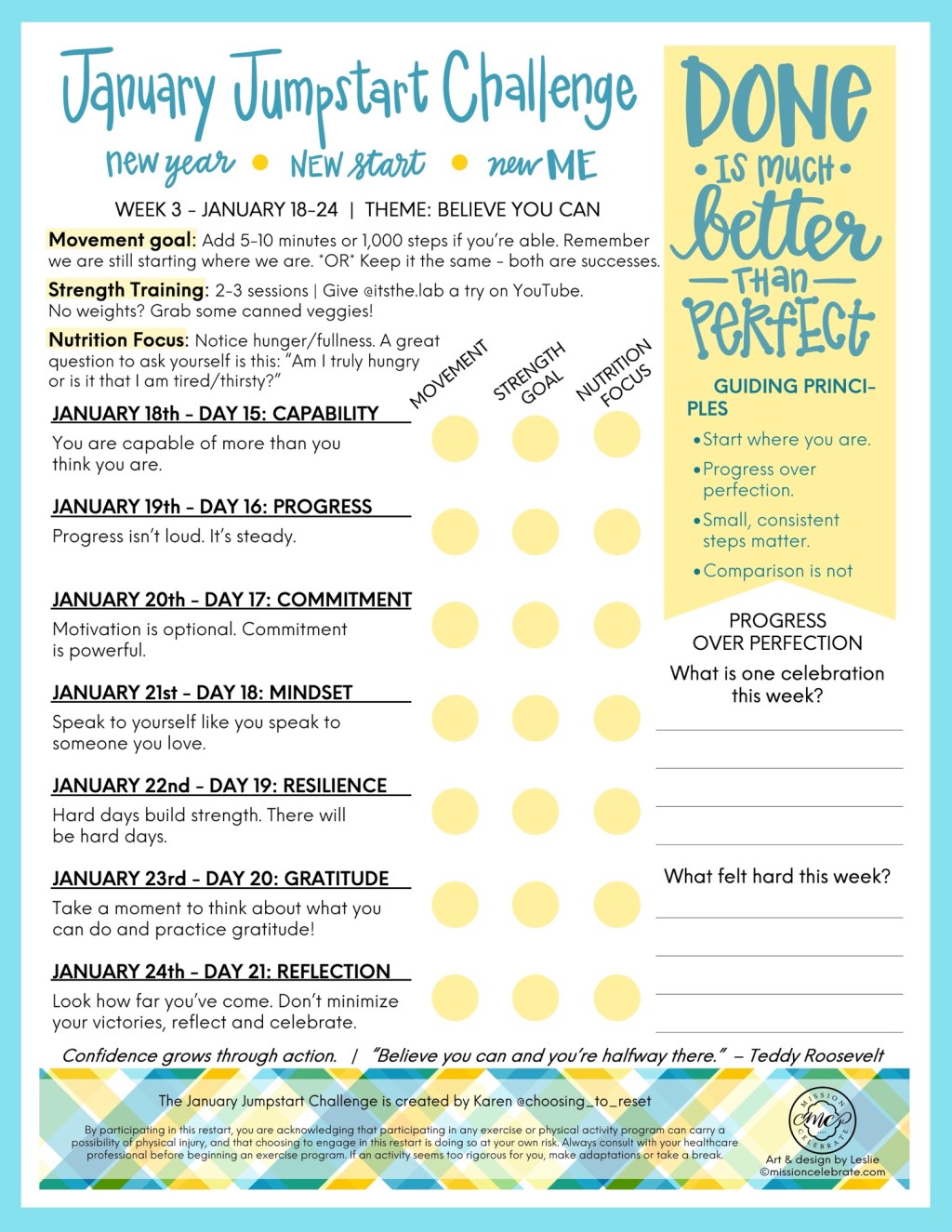
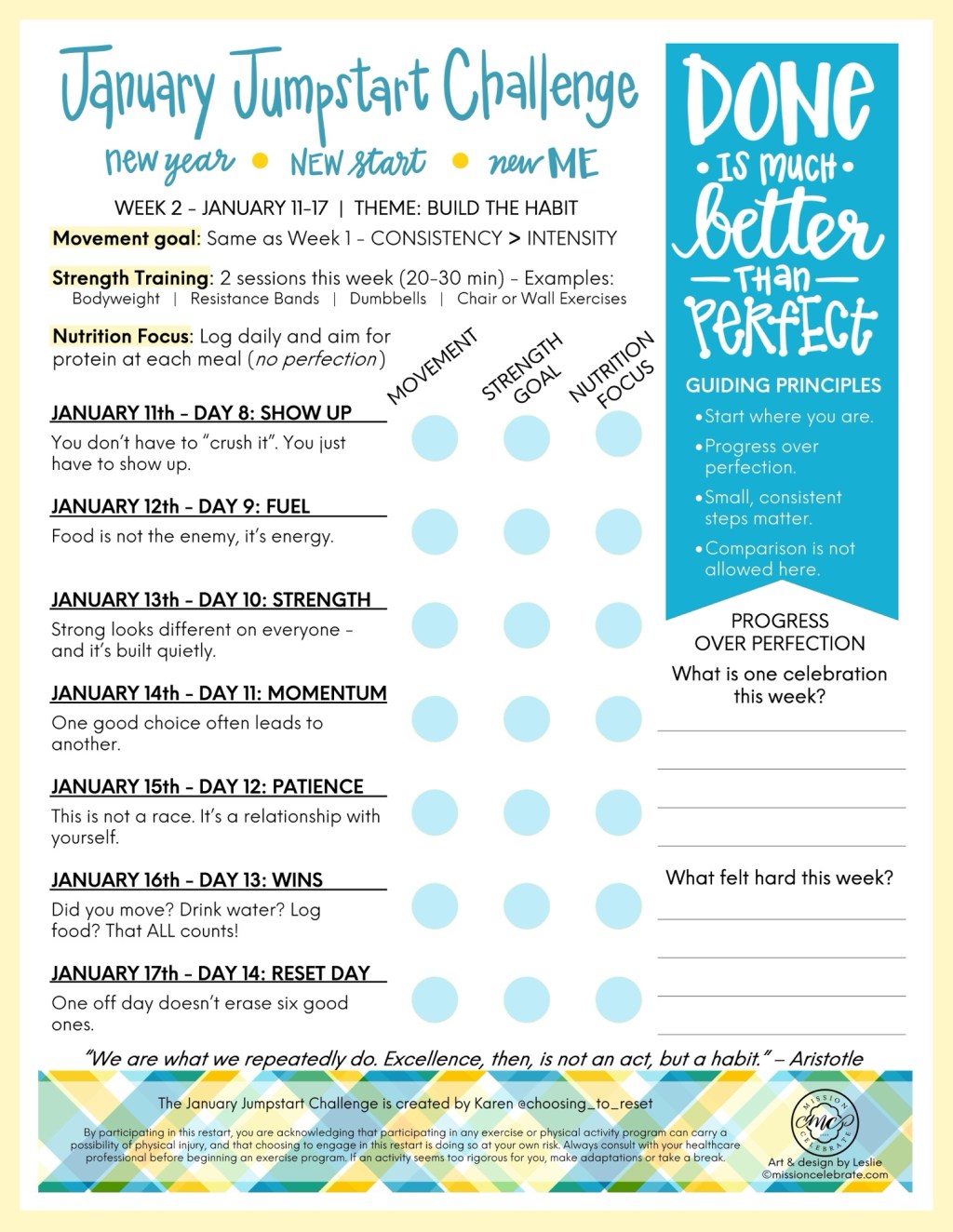
Tracking your progress in some way also helps. It doesn’t have to be fancy. A notebook, a pedometer, smart watch, or app will help you celebrate your consistency. It is not about being perfect, it’s about showing up for yourself.
📌 Research insight:
The European Journal of Social Psychology (Lally et al., 2010) found that it takes an average of 66 days to form a habit. Consistency is more important than intensity early on in your journey.
3. Step Three: Focus on Nutrition That Supports Energy
What I did:
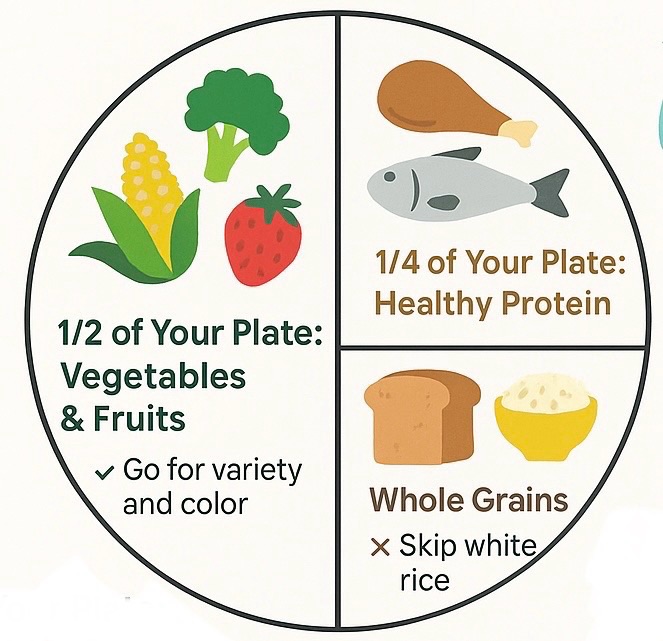
From the beginning of my journey I started eliminating highly processed foods. It just seemed like something that I should do. After two months of walking I started to focus on portion control and through doing a lot of research I settled on the diabetic plate method with adding in fruit snacks in the morning and afternoon. It doesn’t require weighing foods or counting calories which I knew for me wouldn’t be sustainable. It’s simple. Use a 9 inch plate, 1/2/the plate is filled with low calorie, high nutrition vegetables like spinach, broccoli, cabbage, cauliflower, green beans, greens. 1/4 the plate is for healthy starch like sweet potatoes, brown rice, keto friendly high fiber tortillas, 100% whole wheat bread, and the last 1/4 is a lean protein. I later found the Harvard Healthy Plate which I still use when thinking about portions. A nutritionist helped me understand the importance of protein and fiber. I now make both a priority eating. I also make sure that I drink enough water.
Something that I regret not doing at the beginning was to actually track what I was eating to make sure I had an idea what I was eating and I didn’t understand the importance of protein and fiber in my diet.
What you can do:
My advice is that you find a method that works for you to monitor what type food you are eating that is sustainable. I have friends who use apps, friends who keep journals, and some that weigh and measure their food. Whatever works for you but think about what you are eating and how much.
Also, aim for 20–30g of protein per meal Choose fiber-rich foods to support digestion and fullness Drink plenty of water.
📌 Research insight:
Older adults need more protein to maintain muscle. The Journal of the American Geriatrics Society (Bauer et al., 2013) recommends 1.0–1.2g of protein per kg body weight for older adults to maintain muscle mass.
4. Step four: Add Gentle Strength and Balance
What I did:
After 3 months of walking regularly, I added 10-minute beginner strength workouts at home using soup cans and bodyweight. I also practiced standing on one foot while brushing my teeth. I didn’t lose a single pound for two months but I was building stamina, developing habits, and increasing the time I was walking month three I lost three pounds.

What you can do:
2x/week bodyweight workouts (chair squats, wall push-ups, seated core work) Add light weights, resistance bands Practice standing balance. I still keep weights in my kitchen to use while waiting for the microwave to finish, water to boil, or food to cook.
📌 Research insight:
Muscle loss accelerates after age 50 (sarcopenia). Resistance training twice a week helps rebuild muscle and maintain function. According to a meta-analysis in Ageing Research Reviews (Peterson et al., 2010), resistance training improves strength and muscle mass in older adults, even a beginner like me.
5. Step Five: Level Up With Weights
What I did:
By month four/five, I was using light dumbbells and resistance bands. I followed short strength training routines 3 times a week at home using YouTube and Instagram.
What you can do:
Start with full-body strength 2–3x/week Use progressive overload (increase weight/reps over time) Mix in compound movements like squats, rows, and presses
📌 Research insight:
Strength training improves bone density, metabolic health, and mood in postmenopausal women. A 2022 study in Frontiers in Physiology concluded that resistance training improves quality of life and reduces frailty in women 60+ (Lopez et al., 2022).
6. Step Six: Mindset & Community
What I did:
I stayed motivated by sharing my journey on Instagram, connecting with other women online and locally, and celebrating non-scale victories like completing a 5k, lifting bags of birdseed and dog food alone, seeing my clothes fit better and muscle starting to show. I reminded myself that progress isn’t a straight line and that aging strong is worth the effort.
What you can do:

Join a gym, a YMCA, a walking group, look for friends and family who also are working on themselves in a group chat, or online fitness community Set goals like “walk a mile without stopping” Track how your clothes feel, energy, and mood—not just weight
📌 Research insight:
Social support and accountability increase success in fitness journeys. According to Health Psychology (Prestwich et al., 2014), individuals with strong social support are more likely to stick with new exercise routines.
Final Words
Make sure you visit with your doctor before starting anything especially if you have any medical issues.
“It’s never too late to feel strong, energetic, and confident in your body. You don’t need to overhaul your life overnight. You just need to take one small step today then keep going.”
Advice from our friends:
Start by walking. If you get bored try different places or exercises. Exercise DVDs are where I started.
Commit to adding one salad a day plus a 10 to 15 minute walk every day. Don’t give up.
Start with something you enjoy. Swimming, walking, yoga. Schedule it into your day.
Find a tool that will hold you accountable then start.
Consistent “try’s” in small ways add up to actually doing/making the better decisions.
Choose one habit to work on first. No snacks after dinner, or a walk before television.
Using each opportunity as a beginning point to do better. Move more, drink water, your diet…
Don’t wait to start. It will never be a good time. Just start.
Find your people! Talk about it in your circle and see who is interested. It only takes one.
Consistency over excellence.


 Choosing to Reset
Leave a reply to FittalkswithDEE Cancel reply