
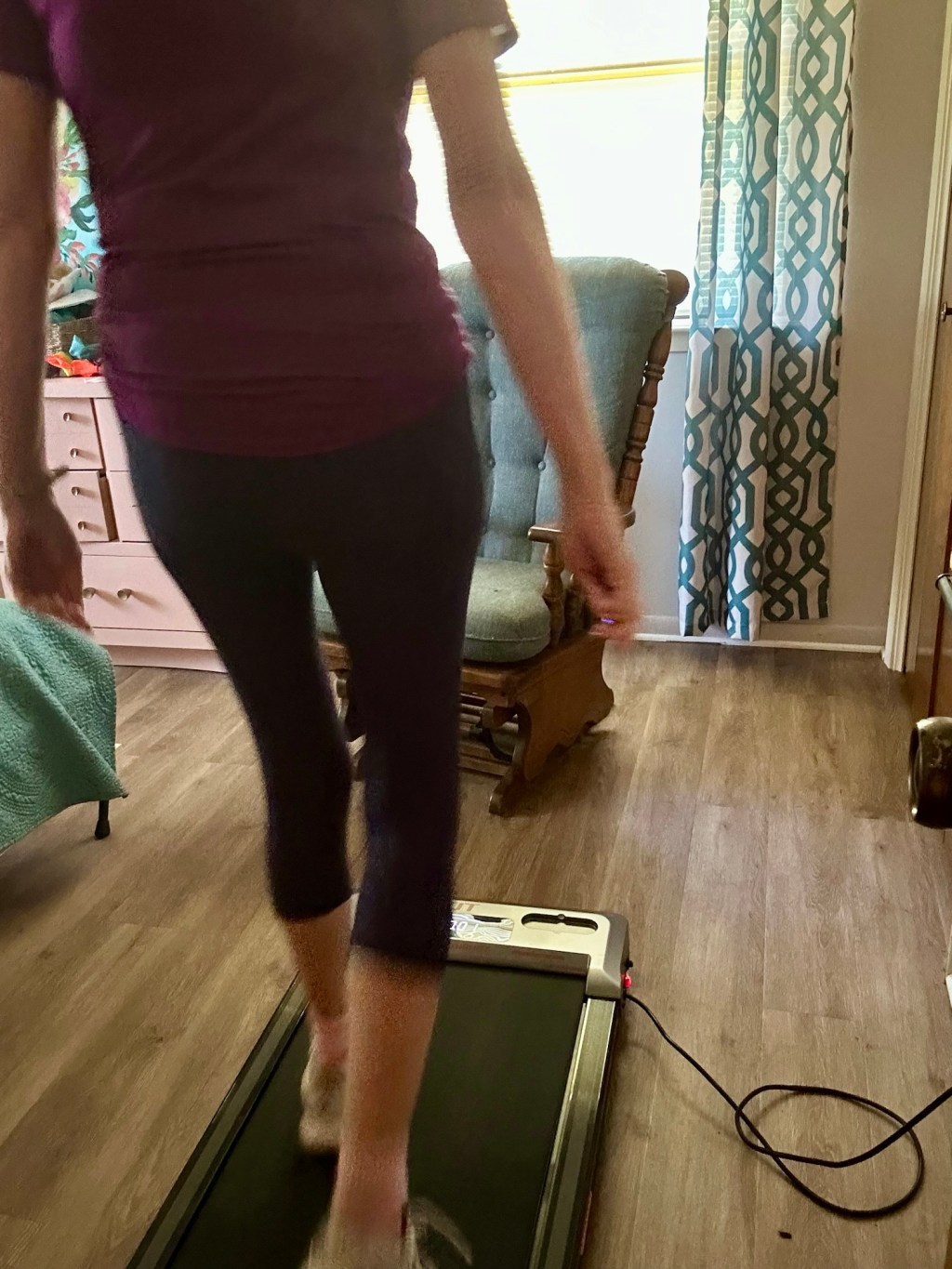
I get asked often about intervals when I mention doing intervals on my walk. I read about interval training on this article in Prevention Magazine. I don’t recommend trying intervals without talking to your doctor if you have any risk factors. I also recommend unless you’re already routinely walking that you get in the habit of walking before trying intervals.
Basically , interval training involves walking at a faster-than-a person’s normal pace for short periods followed by a very short resting pace at a slower rate and repeating the cycle for a set amount of time or distance.
According to the Prevention Magazine article the best way to burn fat is through intervals. Start by warming up for three minutes. Then spend 25 minutes alternating between one minute of walking almost as fast as you can go and one minute of brisk walking (aiming for a walking at a 6 on an intensity scale of one to 10). Cool down for two minutes.
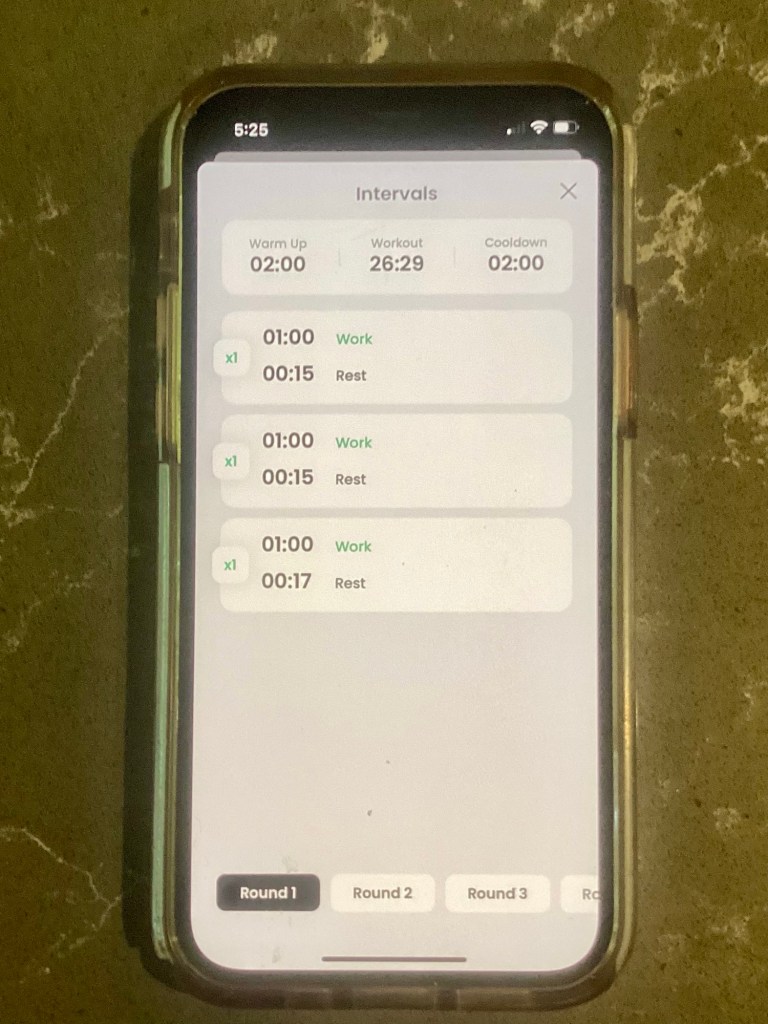
Walking at a more brisk pace than usual for short periods then continuing to walk at a slightly slower “resting rate” for a brief period is at the root of interval training. I now go two minutes at the fastest pace then one minute at the 5 out of 10 pace.
Of course, what’s considered “brisk” did different for each person so it is important to monitor your intensity using the Perceived Exertion Scale (see “Walk and talk”). “This ensures you work hard enough, but not too much,” she says. “Aim for 5 to 6 on the scale during the higher-intensity interval portion of your walk, which is a moderate-intensity level.”
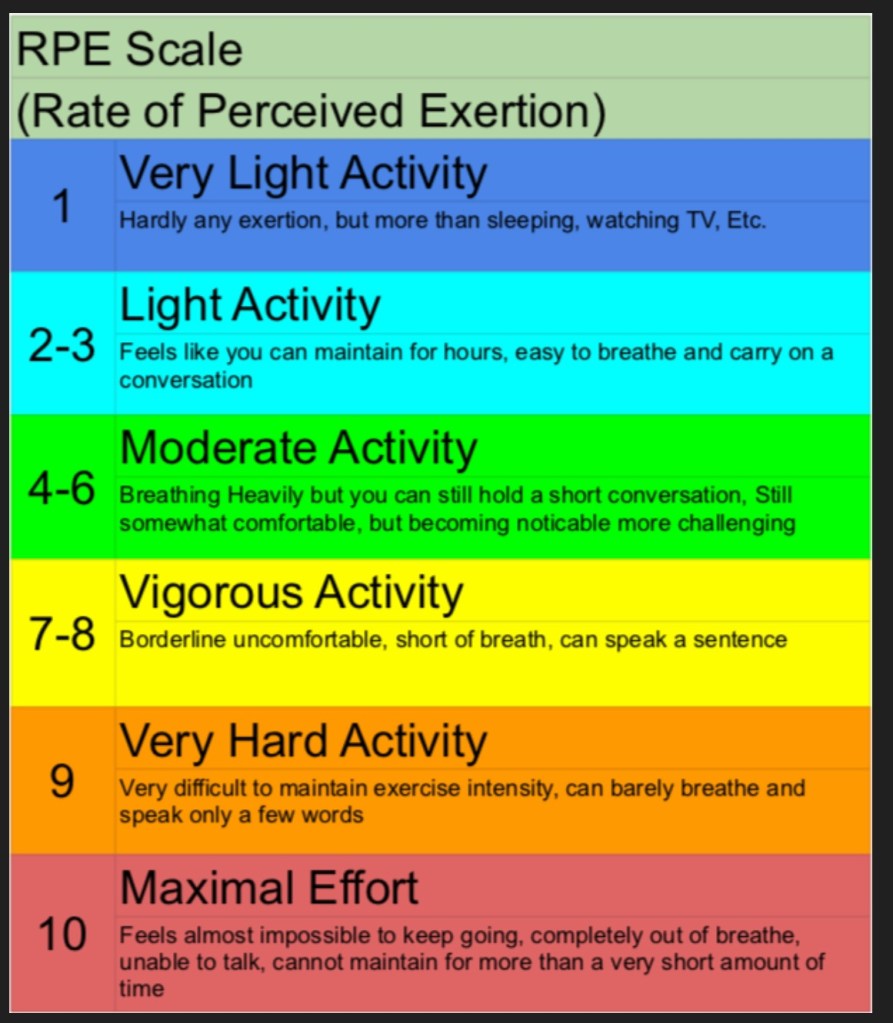
Getting the heart rate up is an important component of intervals. I use my Apple Watch to monitor my heart rate.
Research has found that interval training not only offers many cardiovascular benefits, but also can improve age-related muscle loss. A study published March 7, 2017, in Cell Metabolism found that people ages 65 to 80 who did interval training, including walking workouts, reversed age-related deterioration of muscle cells and improved muscle power.
Find the interval pattern that works best for you and then adjust as you progress. A good starting point is to walk for three to four minutes at your average pace and then briskly walk for 30 seconds; repeat five to 10 times with the goal of increased intensity periods.
Interval walking can improve cardiovascular fitness and burn fat. It involves alternating between different walking paces, which increases your heart rate and helps your body deliver oxygen to your heart muscle. You can try different interval patterns to see what works best for you, and adjust as you progress. Here are some interval walking workouts you can try:
If you search the App Store you will find a ton of interval apps.
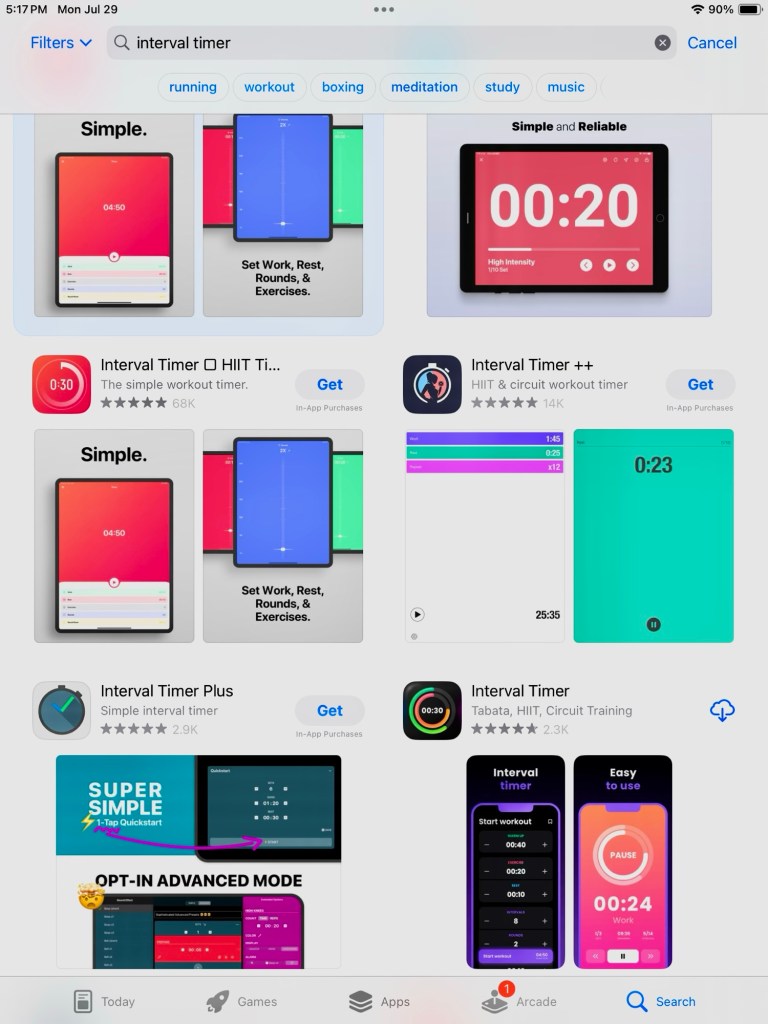
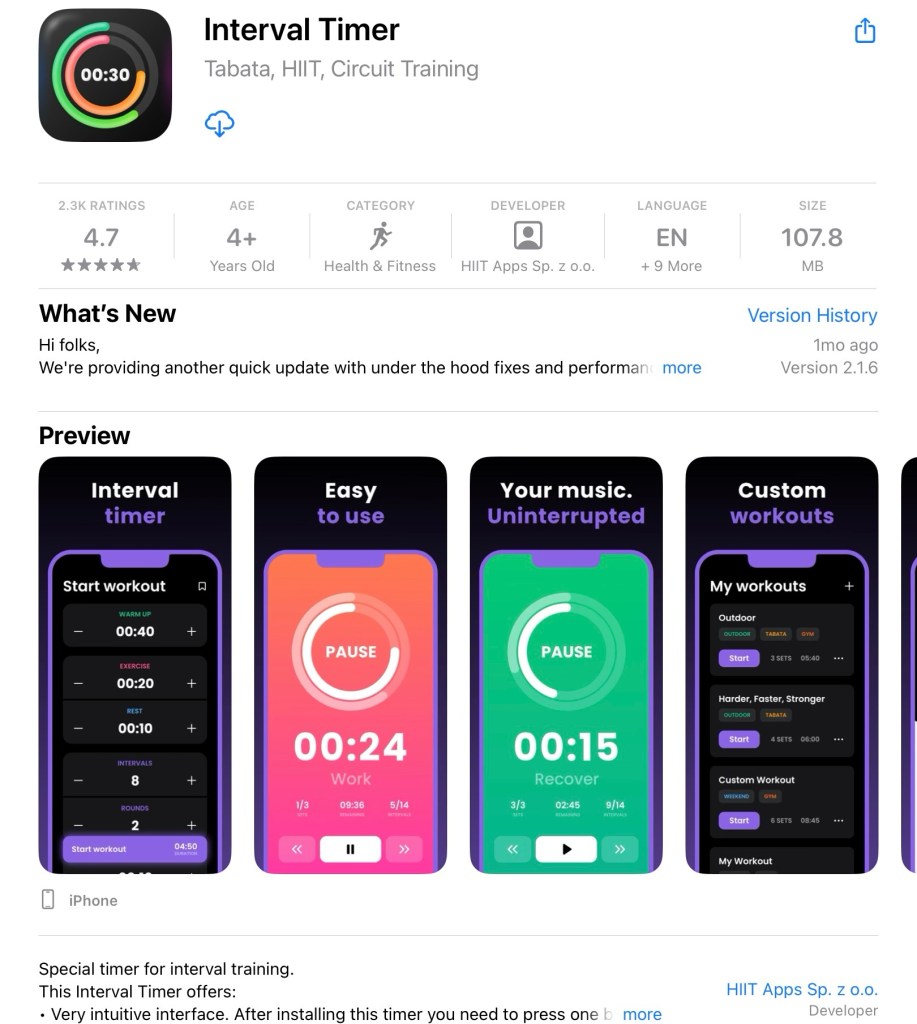
This is the one I use but there is a charge for it. There may be a good free one, I just didn’t find it.


 Choosing to Reset
Leave a comment